
01
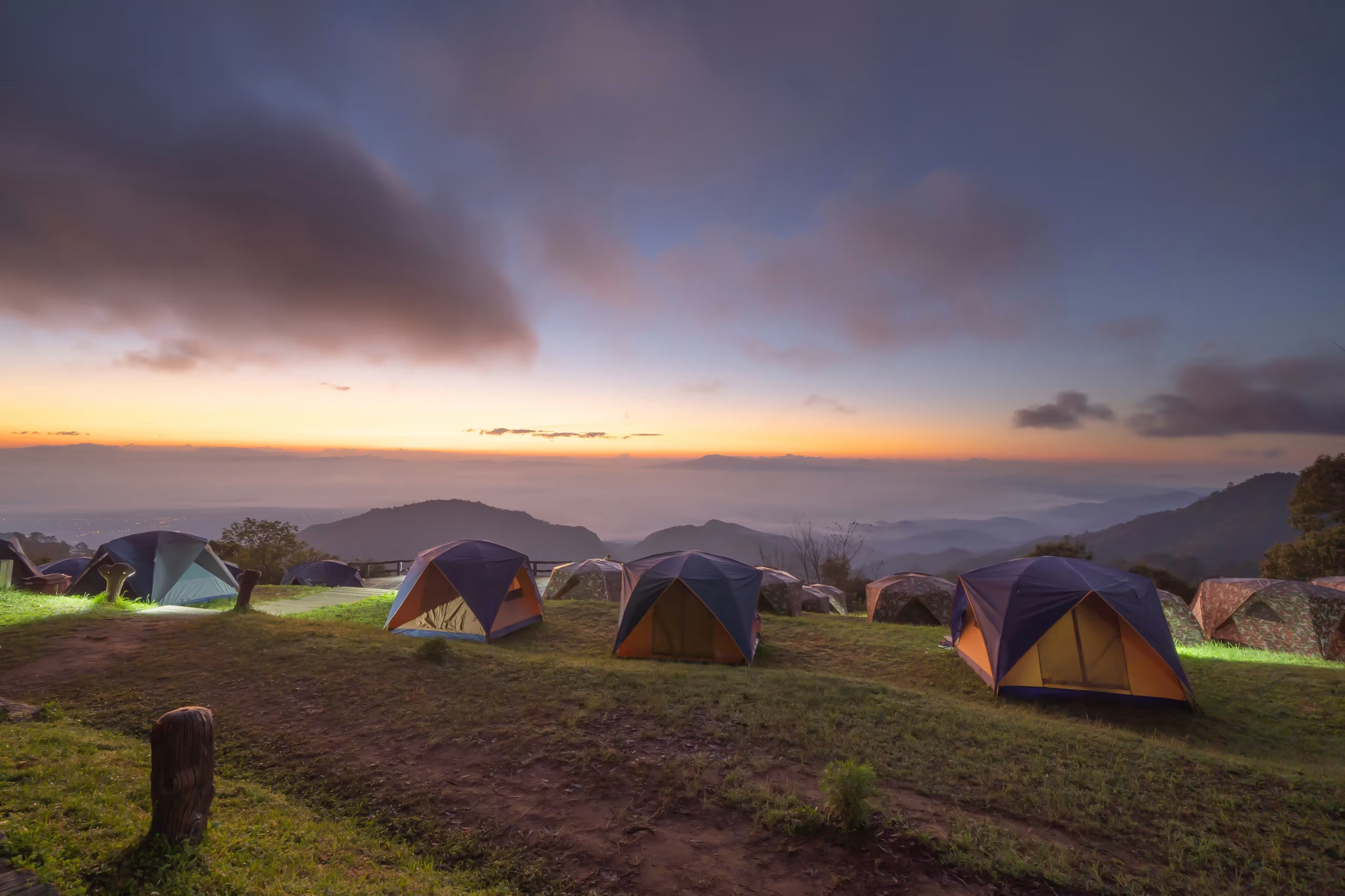 03°08′S 37°19′E
Day 1
Umbwe Gate: 1,600 m to Umbwe Camp: 2,850 m
A steep rainforest climb from the start. It’s direct and intense—pace control is everything.

7 Days Umbwe Route
Umbwe is Kilimanjaro’s steepest and most direct route, designed for experienced hikers who want a tougher, quieter approach and don’t mind big elevation gains early. It climbs fast through the rainforest and reaches higher camps quickly, so it should never be rushed the 7-day plan is the safer choice because it gives your body more time to adjust before summit night. Umbwe is dramatic and rewarding, but it’s best for strong trekkers who can keep a slow pace and respect altitude.You start from Umbwe Gate (1,600 m) and climb sharply to Umbwe Camp (2,850 m), then continue to Barranco Camp (3,900 m) where the route joins the southern circuit. From there you follow the classic line through Karanga (4,035 m) to Barafu (4,640 m) for summit night, reach Uhuru Peak (5,895 m) at sunrise, and descend via Mweka to lower altitude for recovery. For the best conditions, choose Kilimanjaro’s drier seasons: January–mid March and late June–October. Because Umbwe is demanding and the early days are steep, clearer weather and stable trail conditions make a big difference for comfort and safety. To start smoothly, base yourself in central Moshi or just outside town for an easy briefing, gear check, and early pickup for the drive to Umbwe Gate.
Click any destination to explore it on the map.
Multiple parks, several days -- and no wasted transfers. Every drive doubles as a game drive.
03°08′S 37°19′EA steep rainforest climb from the start. It’s direct and intense—pace control is everything.
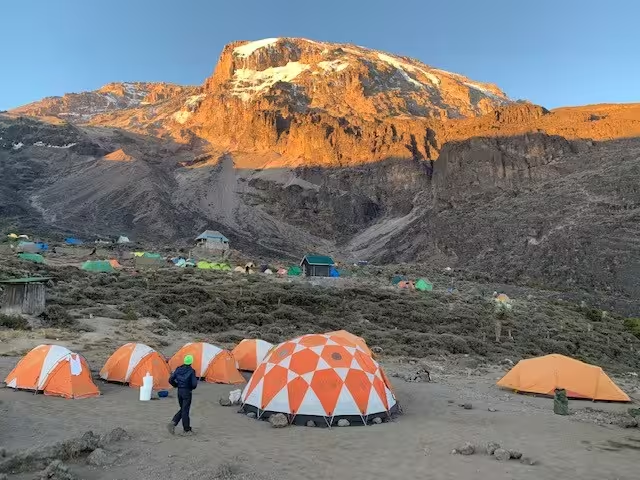 03°06′S 37°20′E
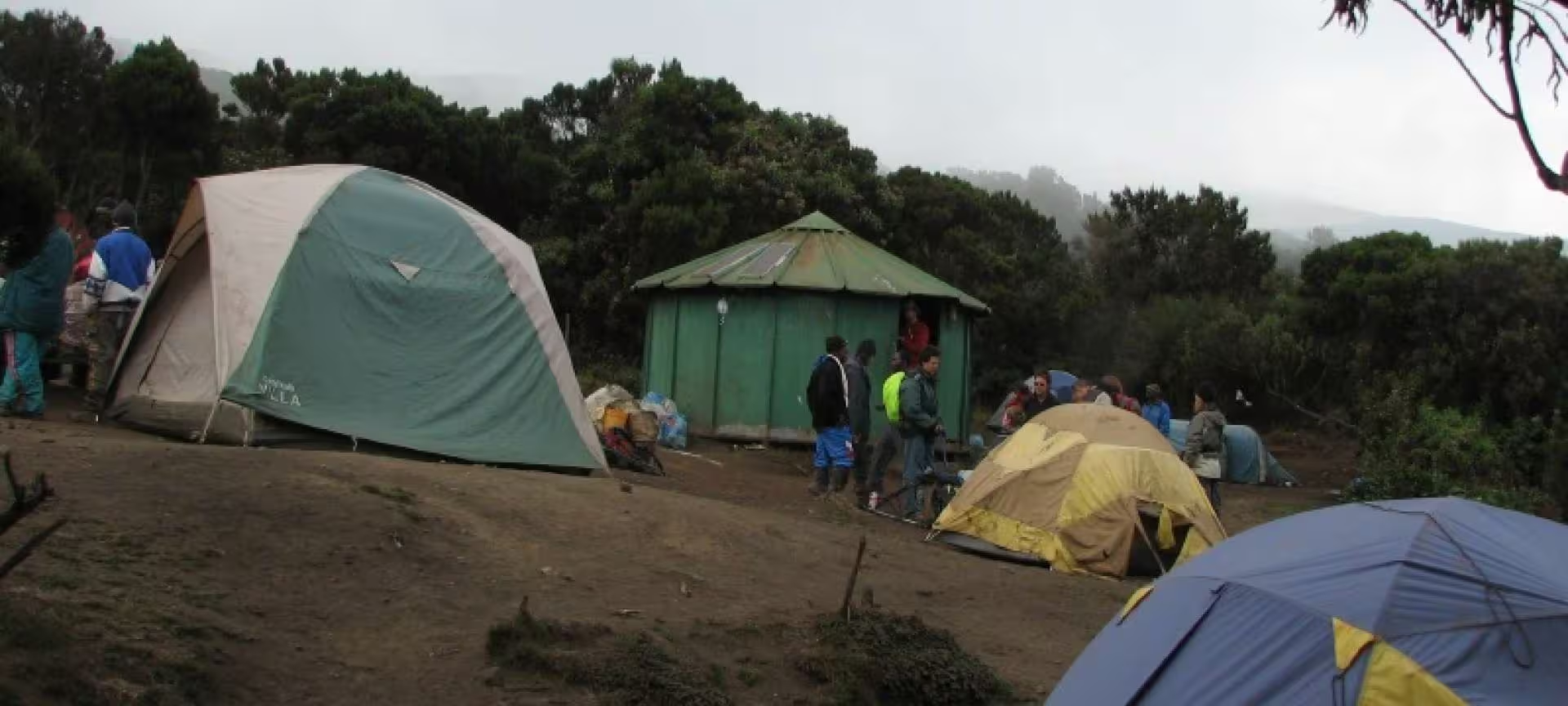
Continue climbing out of the forest into moorland and into the Barranco Valley. Big scenery, but altitude rises quickly—slow and steady.
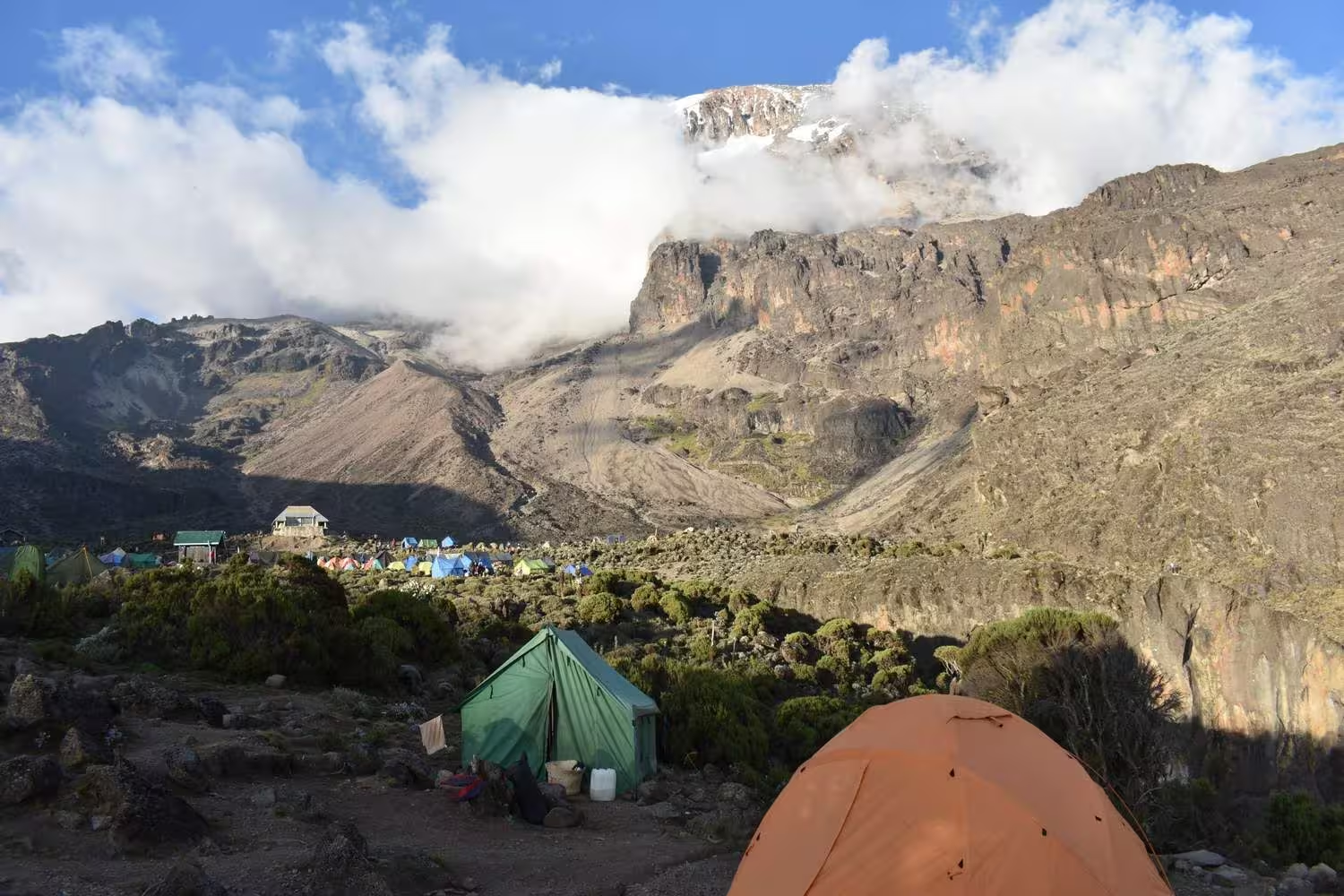 03°07′S 37°21′E
Barranco Wall scramble then traverse. Short day, useful for recovery after the steep approach
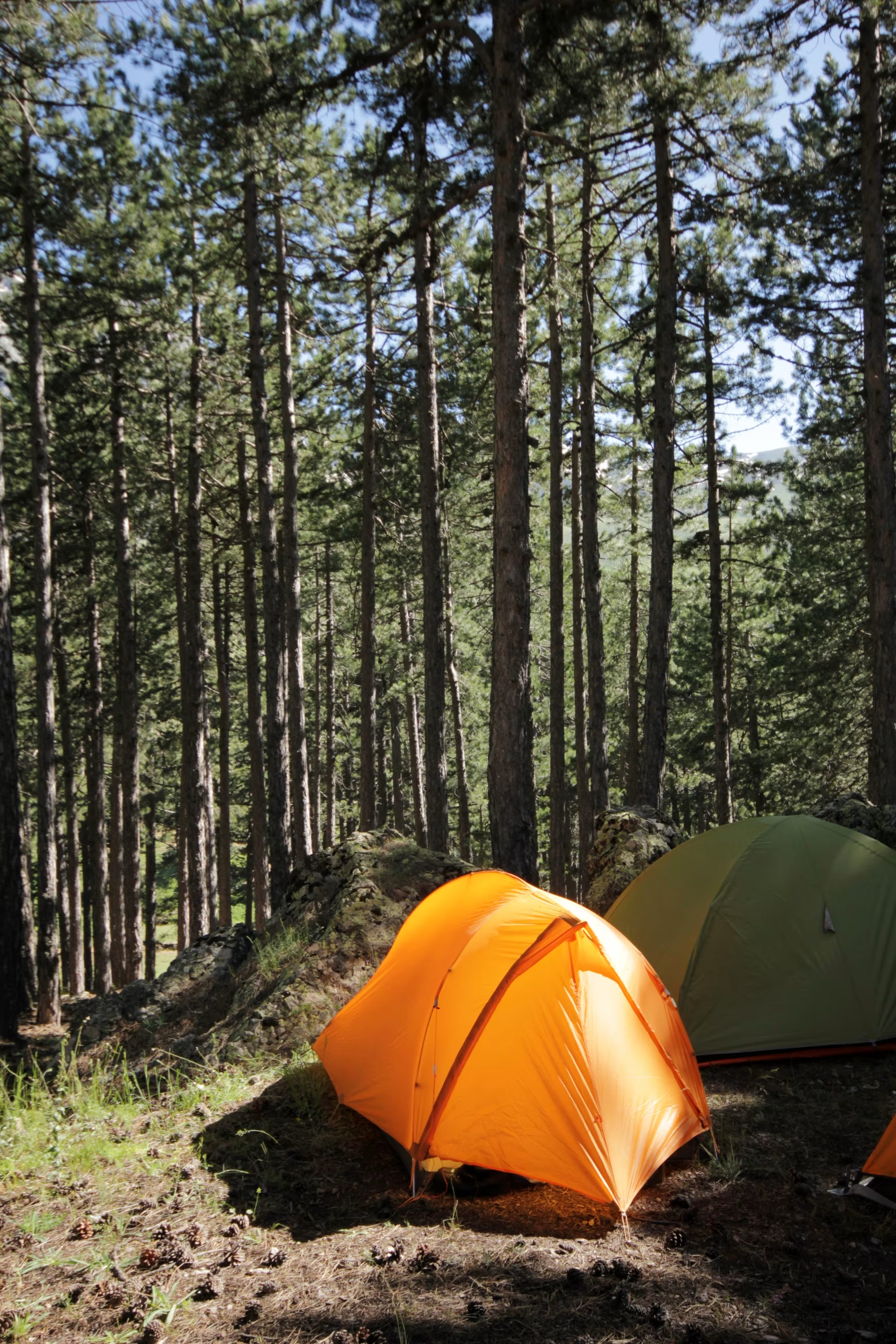 03°06′S 37°23′E
Move into alpine desert and arrive at summit base. Rest and prepare for summit night.
 03°05′S 37°21′E
Summit attempt then long descent hardest day physically and mentally.
 03°09′S 37°22′E
Some operators keep this as a buffer for safety and recovery, especially if summit day was slow or weather affected timing.
 03°13′S 37°20′E
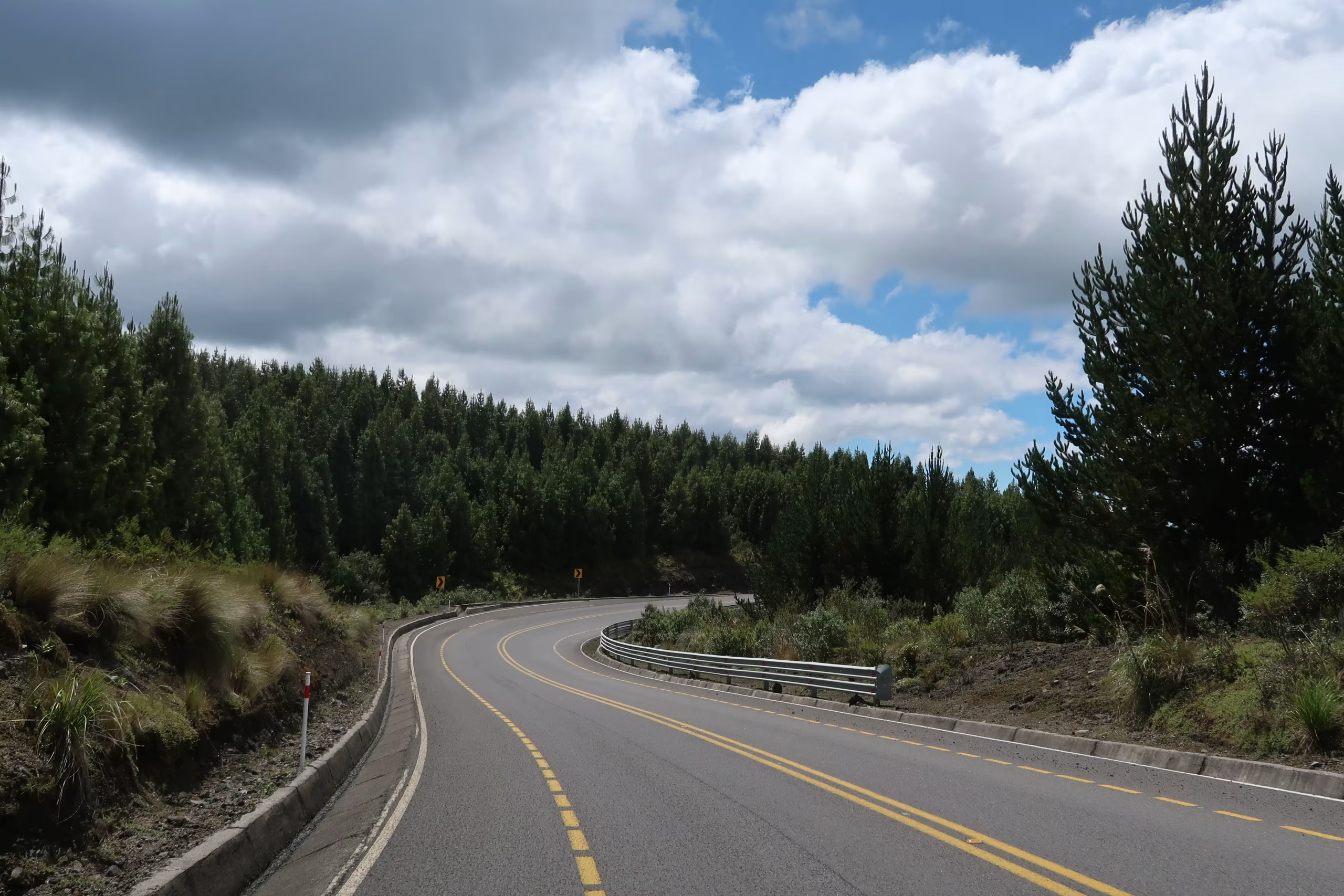
Final descent and certificates.
Optional extras to add before or after your climb.
Time for the briefing and gear check, and a rest after your flight, before the early drive to Umbwe Gate.
A day on Mount Meru or the lower slopes before you start helps on a route that gains height as quickly as Umbwe.
A private toilet tent carried by the crew, a real comfort at Barranco, Karanga and Barafu.
A few days in Tarangire, Ngorongoro or the Serengeti rest your legs and add the wildlife of northern Tanzania.
A steep, direct line up Kilimanjaro's southern side.
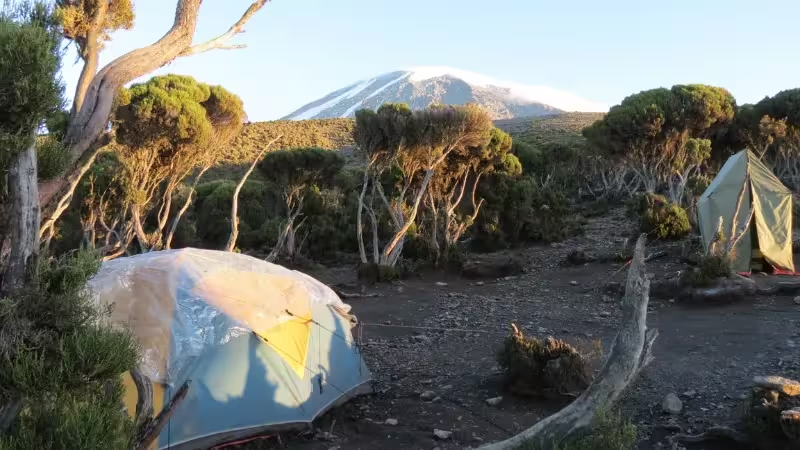
The route starts with a steep climb through dense forest. It gains height quickly, so a slow pace matters from the first hour.
Umbwe joins the southern side of the mountain here, below the glaciers and the Barranco Wall. The valley is a shared camp for several routes.
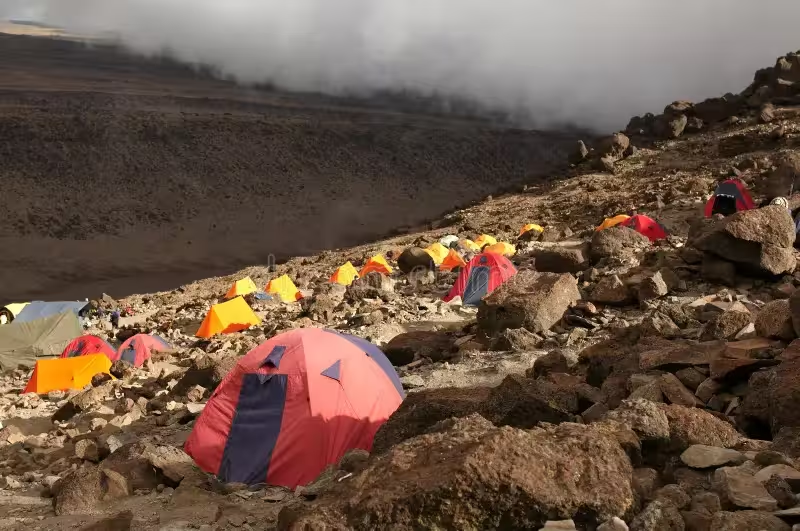
Above Karanga the plants give way to bare rock and gravel. Barafu Camp sits in this zone and is the base for summit night.
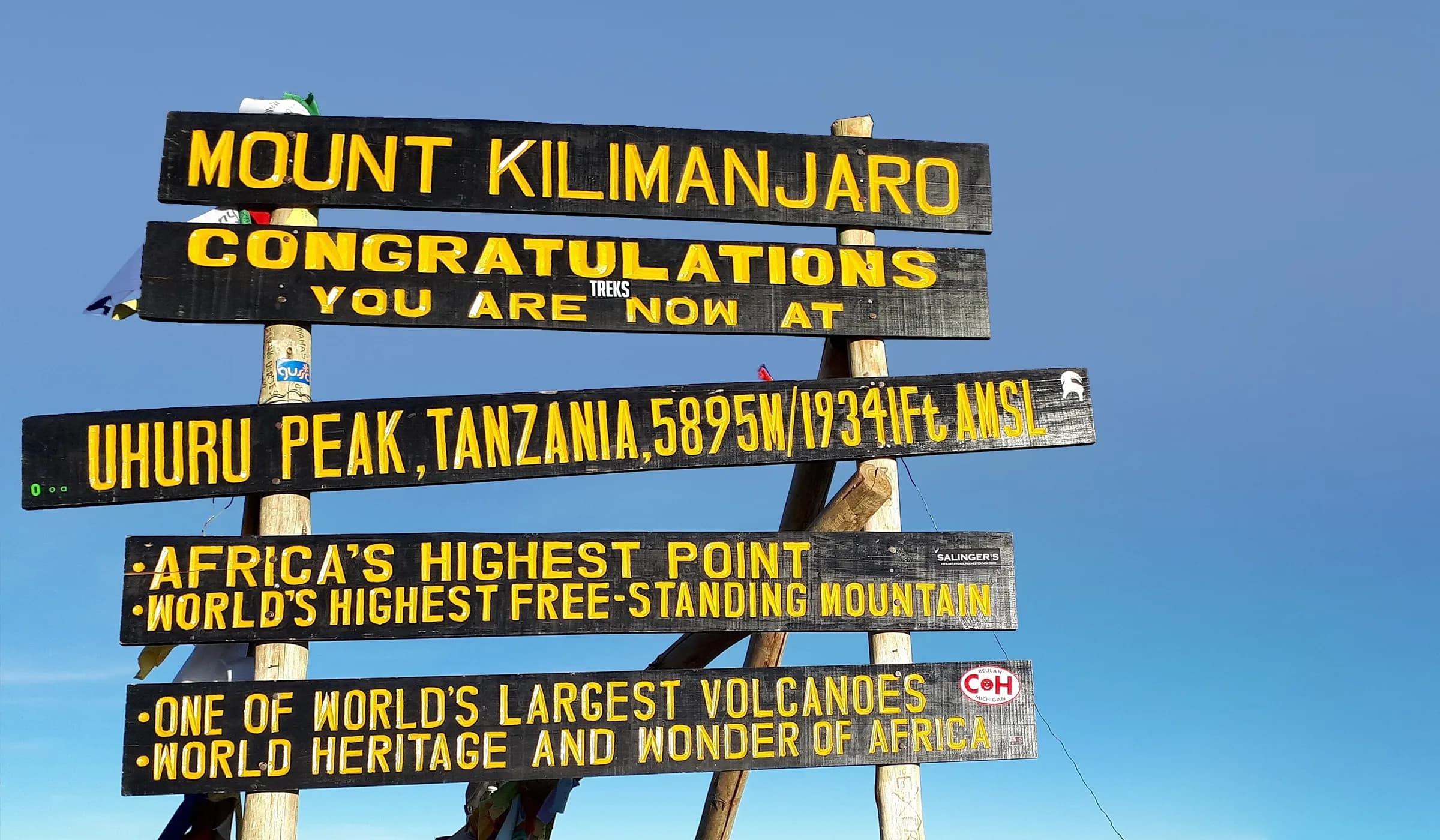
The highest point of Kilimanjaro and of Africa, on the rim of the Kibo crater. The descent after the summit continues down to Mweka Camp.
Price on request — contact us for a quote for this trip.
This is the longer of Kilimanjaro's two dry seasons and the most popular time to climb. Trails are drier, skies are often clear and summit views are at their best. Nights at the high camps are cold, so warm layers matter more than at any other time. On Umbwe, dry trails matter more than on most routes, because the first two days are so steep.
The second dry window is a little warmer and usually quieter on the trail. Short showers are possible in December and occasional snow can fall near the summit. Clear mornings are common and the views of the plains below can be very good.
April and May are the long rains, and November brings shorter rains. The forest trails get muddy, cloud often hides the views and summit night can be wet or icy. Climbs do run in these months, but we would steer you to the dry season if your dates can move.
Fly into Kilimanjaro International (JRO), which is about 45 minutes from Moshi. We strongly recommend arriving at least one day before the climb and spending a night in Moshi, so we can do the briefing and gear check and you start rested. The drive to Umbwe Gate is then early on day 1.
Day 7 ends at Mweka Gate around midday or early afternoon, followed by the drive back to Moshi. Most climbers are tired and sore after the descent, so we recommend one more night in Moshi and flying out the next day. If you must fly the same evening, tell us and we will plan the descent and transfer around it. Most passports need a Tanzania visa. Apply online at the official immigration portal well before you travel rather than queueing for one on arrival.
Umbwe sees few climbers on its first two days, and the steep ridge through the forest is unlike any other start on the mountain.
From day 2 you follow the proven line through Karanga to Barafu, with its gradual gains and good acclimatisation.
Day 6 gives room for a slow summit night or bad weather, so the descent never has to be rushed.
A steep route needs more time, not less. The longer plan gives your body the best chance to adjust before Uhuru Peak.
What people most often ask about the steep Umbwe Route.
Tell us when you would like to travel and we will send you a tailored quotation.