
01
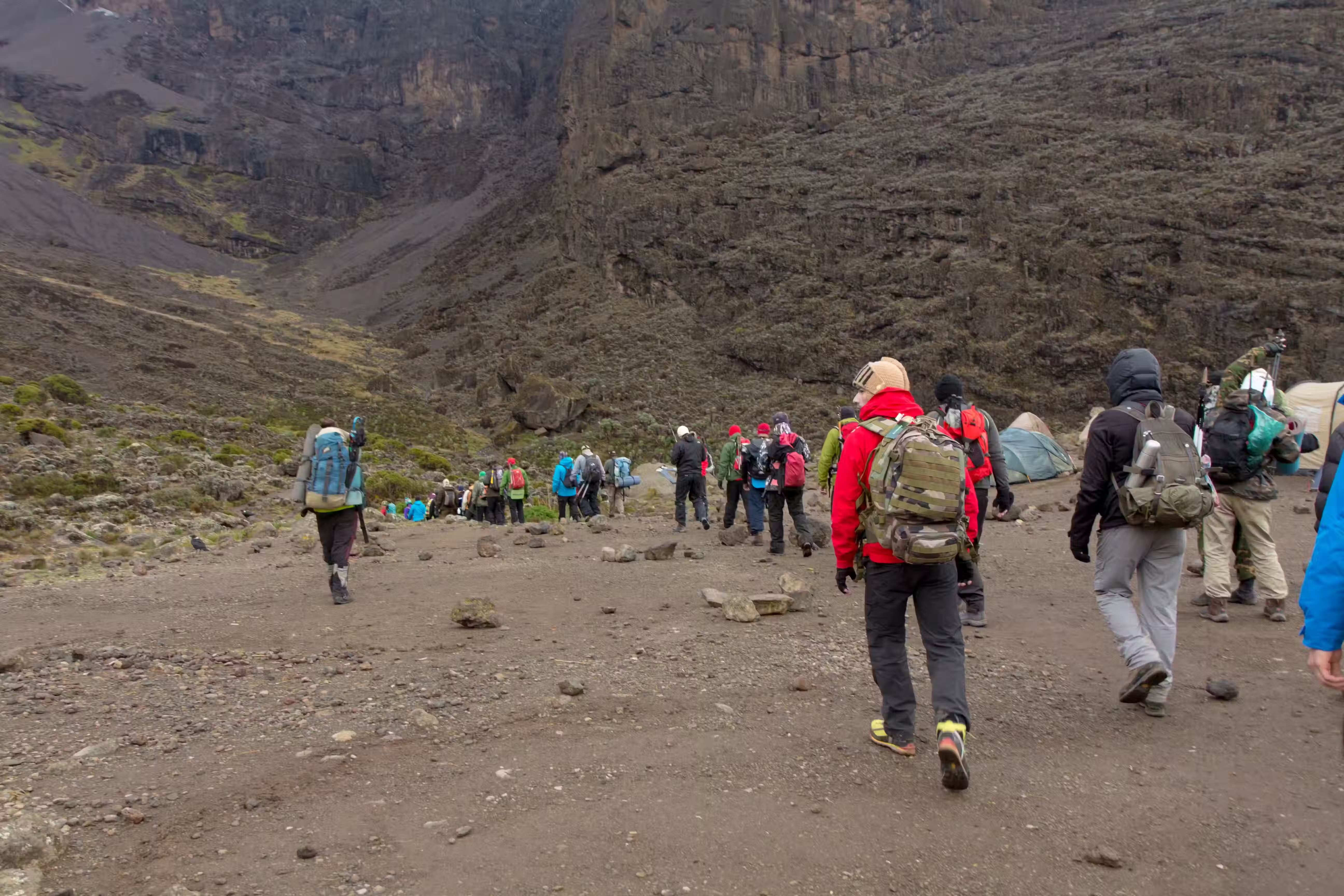 02°59′S 37°27′E
Day 1
Rongai Gate: 1,950 m to Simba Camp: 2,600 m
A gentle start through farmland and forest on the northern side. Quieter trails and a relaxed gradient make it feel manageable early on.

7 Days Rongai Route —
Rongai is the ideal Kilimanjaro route if you want a quieter climb with a gentler, steady gradient, approaching the mountain from the north / northeast. Because this side is often drier, Rongai is a smart option during wetter periods, and it usually feels less crowded than the popular southern routes. Choosing the 7-day version is important it gives you extra acclimatization time, improving comfort and summit success compared to rushing.You start at Rongai Gate (1,950 m) and hike through forest and open moorland to camps like Simba (2,600 m) and Kikelewa (3,600 m), then climb to the scenic Mawenzi Tarn (4,330 m) beneath Mawenzi’s dramatic peaks. From there you cross the saddle to Kibo Hut (4,700 m) for summit night, reach Uhuru Peak (5,895 m) at sunrise, and usually descend via the Marangu side, often sleeping at Horombo Hut (3,720 m) before finishing at Marangu Gate (1,860 m).For the best conditions, aim for the dry seasons: December to mid-March and late June to October with Rongai especially valued when weather is less predictable because the north side can stay drier. Start smoothly by basing yourself in central Moshi or a quiet lodge just outside town for an easy briefing, gear check, and early pickup.
Click any destination to explore it on the map.
Multiple parks, several days -- and no wasted transfers. Every drive doubles as a game drive.
02°59′S 37°27′EA gentle start through farmland and forest on the northern side. Quieter trails and a relaxed gradient make it feel manageable early on.
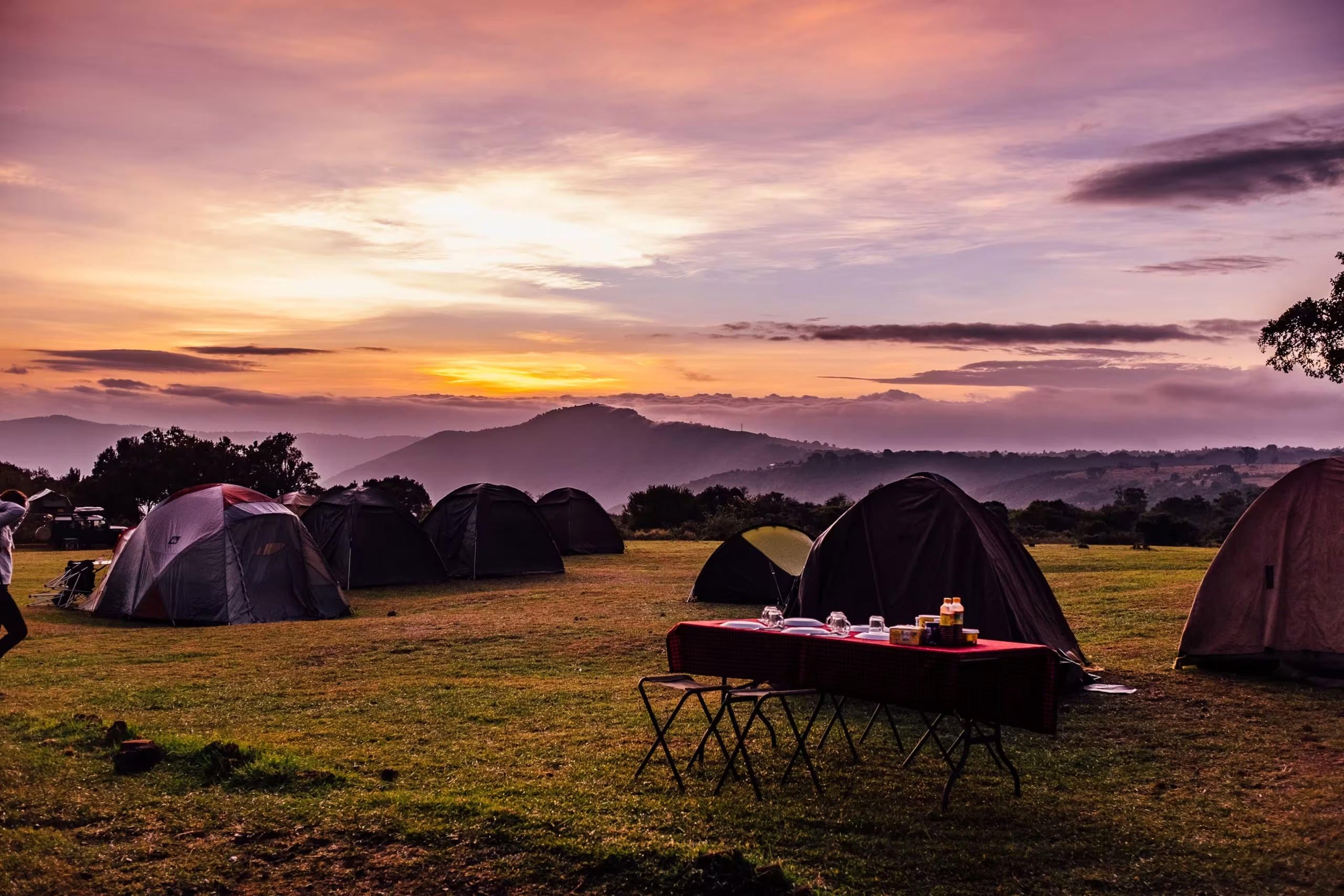 03°03′S 37°27′E
Climb into moorland with expanding views. The air cools and dries steady pace and hydration matter.
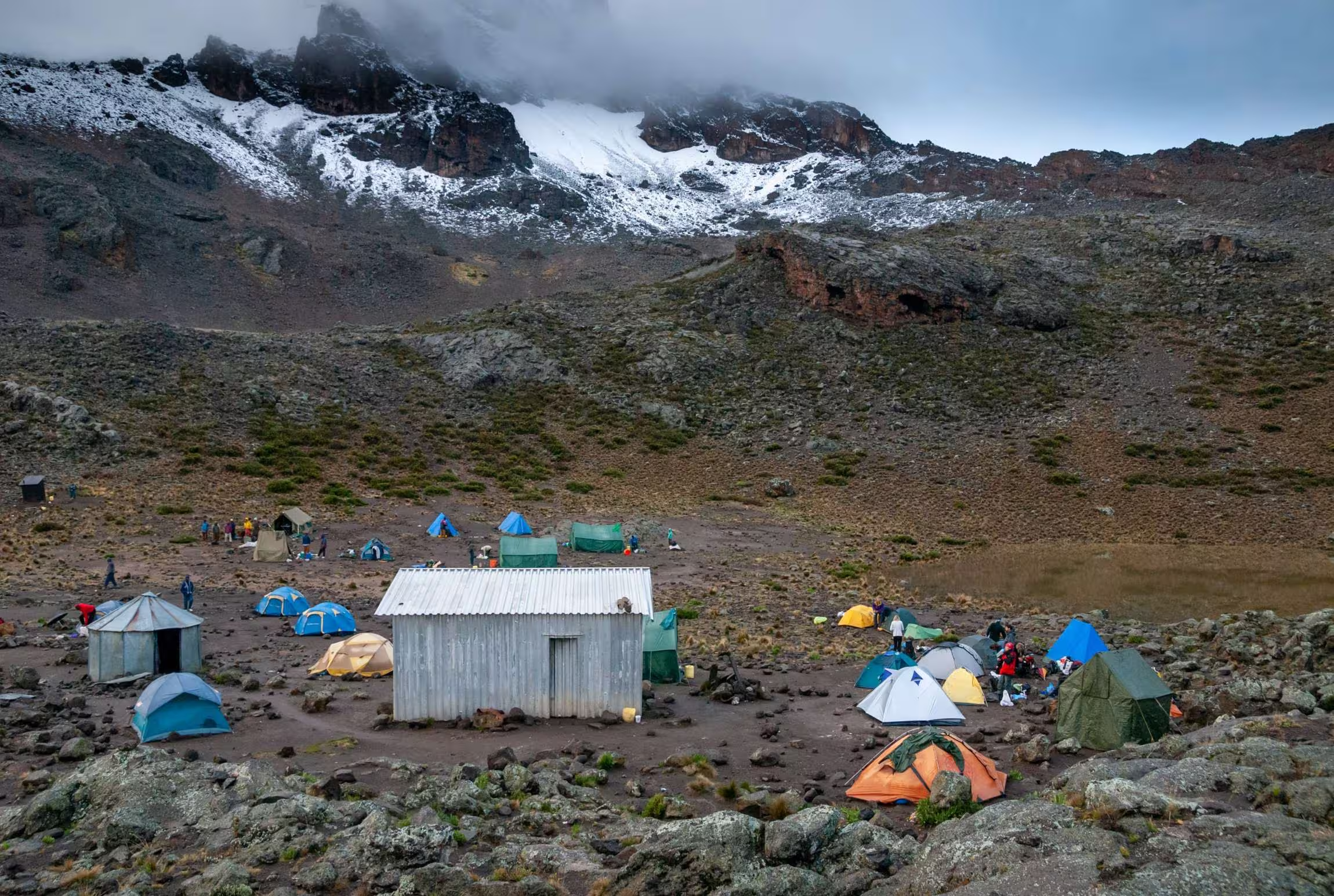 03°05′S 37°27′E
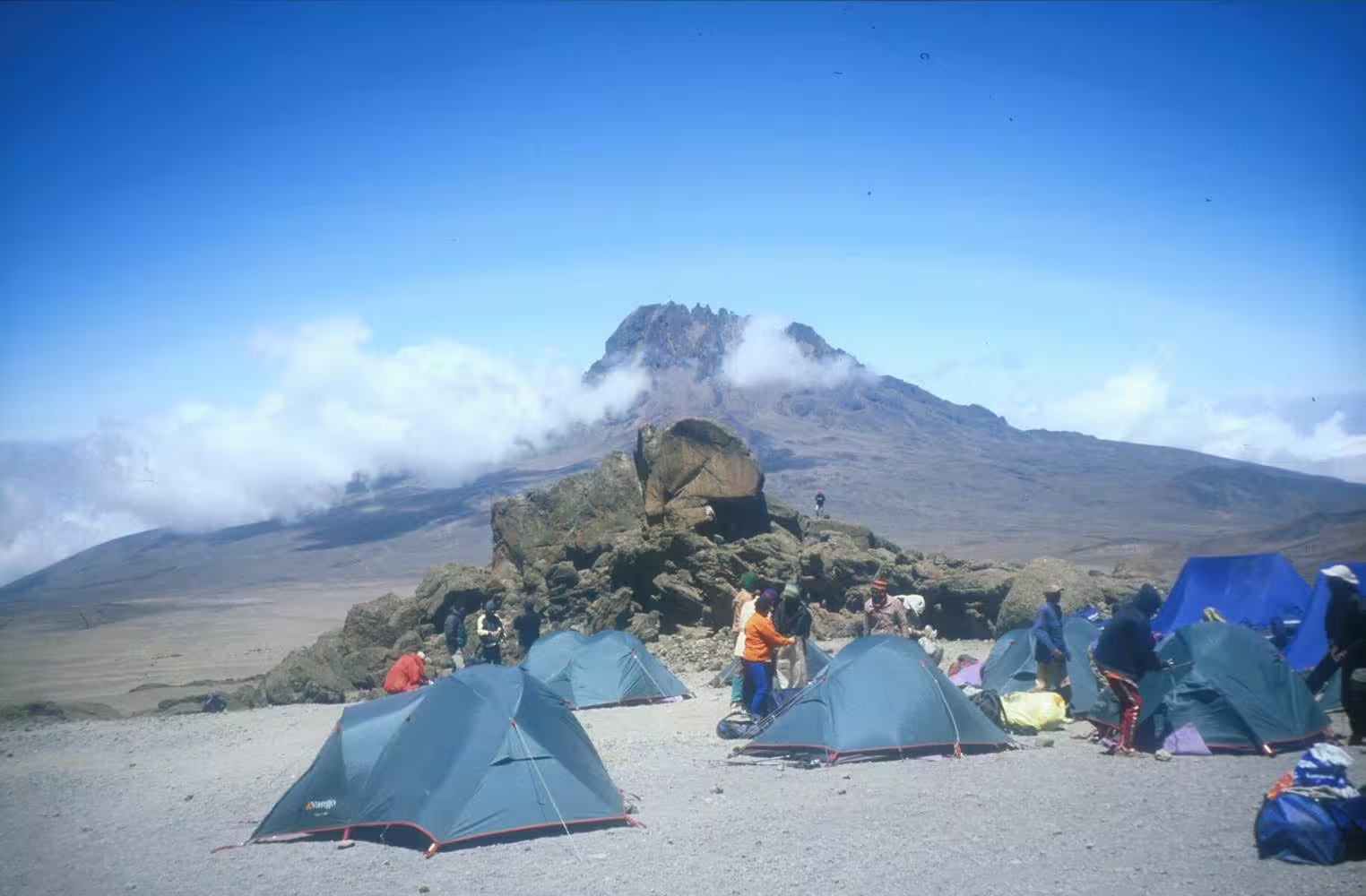
A scenic climb beneath Mawenzi’s jagged peaks. This is a beautiful high camp and an important acclimatization step.
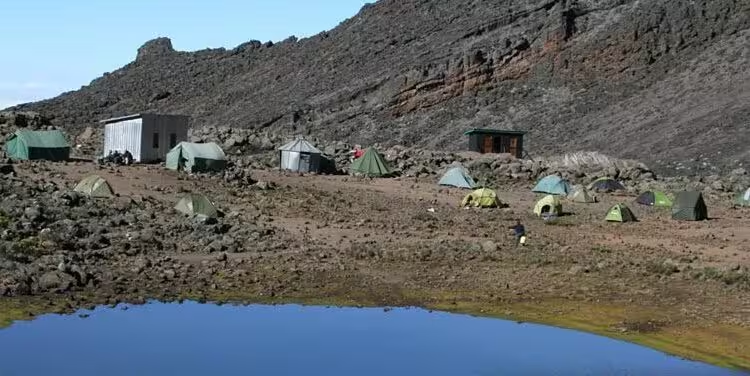 03°05′S 37°27′E
climb-high, sleep-low style day (short hikes around camp). This day is the secret to making Rongai safer and more successful.
 03°05′S 37°23′E
Cross the saddle toward Kibo—open alpine desert. Arrive at Kibo, eat early, rest, and prepare for summit night.
 03°08′S 37°26′E
Summit at sunrise, then descend down to Horombo for a much better recovery night.
 03°15′S 37°31′E
Final descent through forest to the gate for certificates, then transfer.
Optional extras to add before or after your climb.
Time for the briefing, a gear check and a good sleep before the drive to Rongai Gate.
Down jackets, sleeping bags, poles and gaiters can be hired in town if you do not want to buy or carry them.
A private toilet tent that the crew carries and sets up at each camp.
Tarangire, Ngorongoro or the Serengeti are a few hours from Moshi, and a few days in a vehicle are a good rest for tired legs.
The climb crosses Kilimanjaro from its northern forest to the summit and down the south-east side.
The Rongai route starts near the Kenyan border on the drier northern side of Kilimanjaro. The path climbs through farmland and forest into open moorland.
Mawenzi Tarn is a small lake below the jagged peaks of Mawenzi, the second summit of Kilimanjaro. At 4,330 m it is a high camp used for acclimatisation.
The Saddle is a high alpine desert between Mawenzi and Kibo, with very little plant life. Kibo Hut at 4,700 m is the base for the night climb to the summit.
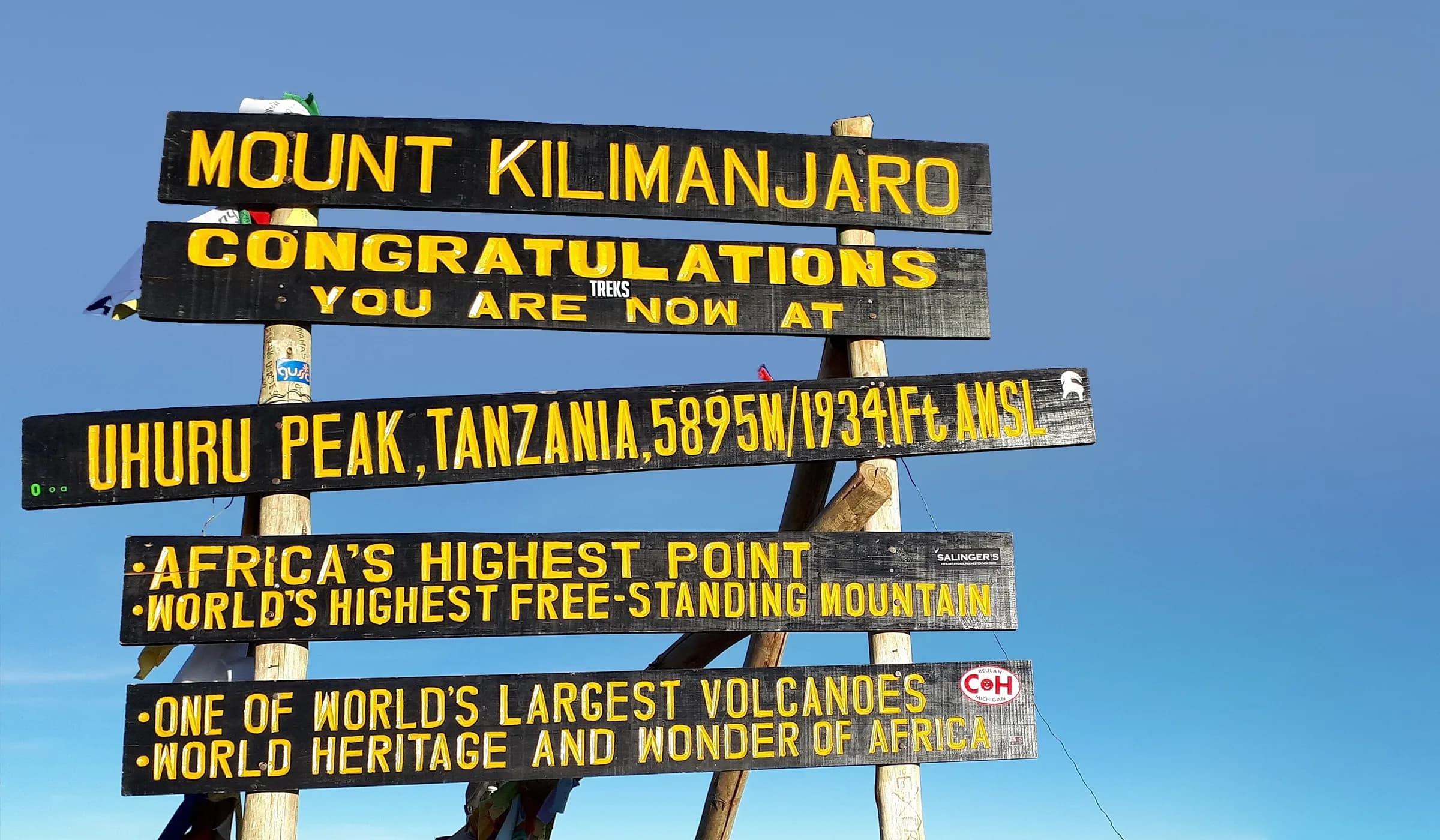
Uhuru Peak on the crater rim of Kibo is the highest point in Africa at 5,895 m. Most climbers reach it around sunrise after setting off near midnight.
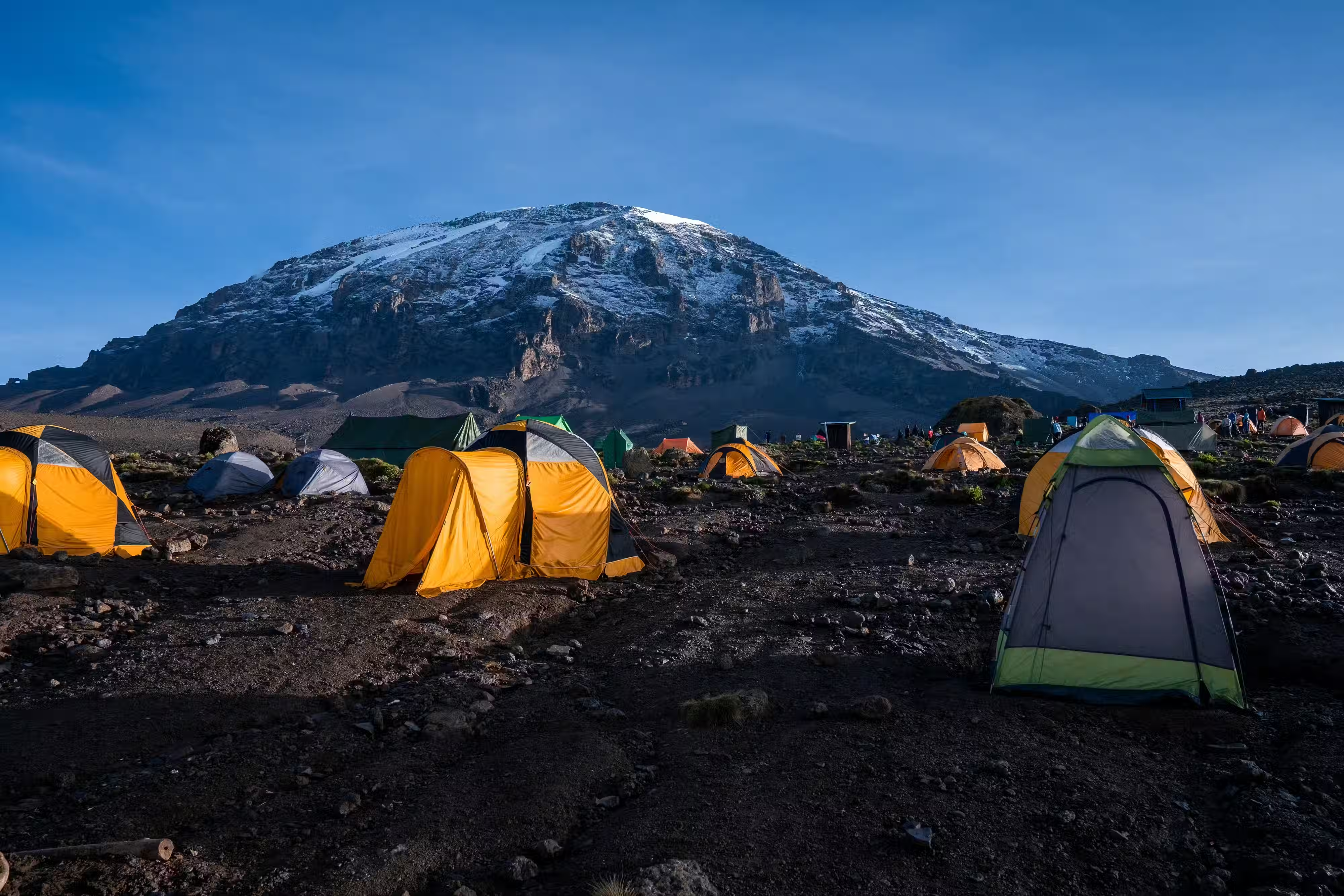
The descent follows the Marangu route past Horombo Hut and down through the rainforest to Marangu Gate at 1,860 m, where climbers collect their certificates.
Price on request — contact us for a quote for this trip.
The long dry season brings the clearest skies and driest paths. It is cold at night at Mawenzi Tarn and Kibo Hut, and summit night is well below freezing, but the views over the saddle are at their best. July to September are the busiest months, though Rongai stays quieter than the southern routes.
The second dry season is a little warmer and greener, with short showers possible in the forest. There may be some snow on the summit. Because Rongai is on the drier north side, it is also a sensible choice at the edges of the wet seasons.
The long rains in April and May bring heavy cloud and muddy paths, and November has short rains. Rongai is drier than the south side, but summit views are often lost and the climb is harder work. If these are your only dates, talk to us first.
Fly into Kilimanjaro International (JRO), under an hour from Moshi. The climb starts on day 1 at Rongai Gate on the far north side of the mountain, so arrive at least a day earlier and stay in Moshi for the briefing and gear check. A hotel before and after the climb is not included, and we can book one for you.
Day 7 is the long descent from Horombo Hut to Marangu Gate, about 20 km, then the drive back to Moshi. Do not fly home that evening. Book a night in Moshi and fly the next day, so a slow descent or a weather delay does not cost you a flight.
Rongai starts near the Kenyan border and sees fewer climbers than the southern routes, so the camps are calmer and the paths less crowded.
Day 4 is spent at 4,330 m with a short climb high and a return to sleep at camp. It is the day that most helps your body adjust before Kibo.
The daily climbs on Rongai are gentle and even, so you walk at a slow, sustainable pace instead of struggling up steep sections.
You descend via Horombo Hut and Marangu Gate, so you see both the north and the south of the mountain and sleep low enough on summit night to recover.
Answers to common questions about climbing Kilimanjaro by the Rongai route.
Tell us when you would like to travel and we will send you a tailored quotation.