Nyakwardayo Expeditions Travel

Mount Kilimanjaro — The Roof of Africa.

7 Days Machame Route

Mount Kilimanjaro — The Roof of Africa.

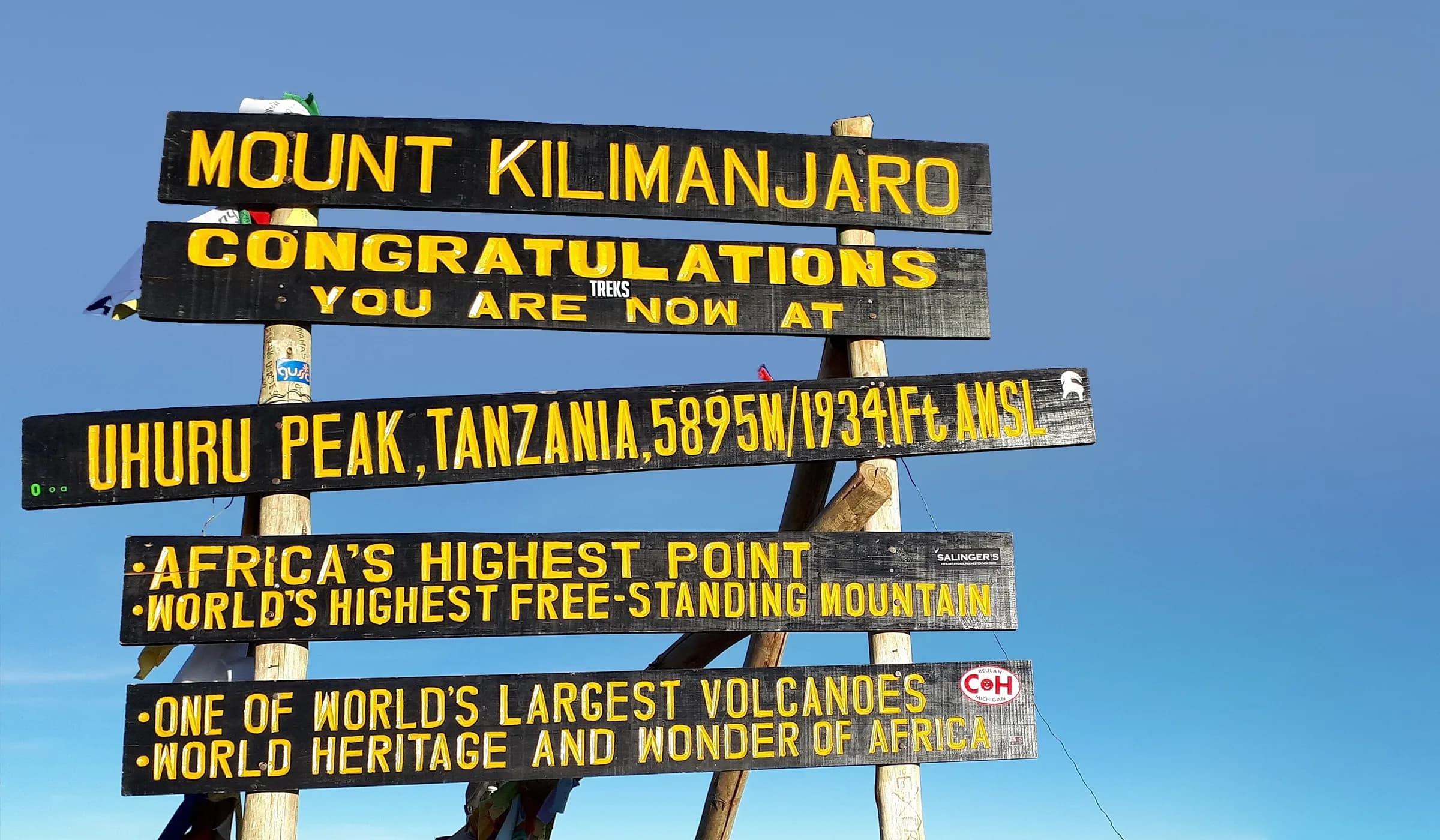
Mount Kilimanjaro is Tanzania’s legendary summit and one of the world’s most iconic trekking experiences rising above the plains as a snow-capped beacon that feels almost unreal in East Africa. The journey isn’t technical climbing for most routes; it’s a high-altitude hike that takes you through a full “vertical safari” of landscapes, from rainforest and moorland to alpine desert, ending at the crater rim and the famous summit viewpoint at Uhuru Peak. Along the way, your days follow a steady rhythm walk, rest, hydrate, and acclimatize guided by an experienced mountain team that sets the pace and keeps everything smooth. Whether you choose a short classic route or a longer, quieter itinerary built for acclimatization, Kilimanjaro is about more than reaching the top: it’s sunrise above the clouds, big-sky silence, and the proud moment of standing on the Roof of Africa. Machame is the most popular route because it gives you huge scenery changes (rainforest to moorland to alpine desert to glaciers) and, on 7 days, it follows a strong “climb high, sleep low” acclimatization pattern especially the Lava Tower day so most hikers handle altitude better than on shorter plans. You begin at Machame Gate (1,640 m) and camp at Machame Camp (2,835 m), then reach Shira Camp (3,750 m). The acclimatization highlight is hiking up to Lava Tower (4,600 m) before descending to Barranco Camp (3,900 m). You continue to Karanga (4,035 m) and Barafu (4,640 m) for summit night, then push to Uhuru Peak (5,895 m) at sunrise and descend to Mweka Camp (3,100 m), finishing at Mweka Gate (1,640 m). The most reliable conditions are during Kilimanjaro’s dry seasons: January to mid-March and June to October with January/February and July–October often highlighted for clearer skies and less rain.

Duration 7 Days Parks 8

Tour Length 7 Days / 6 Nights
Country Tanzania
Start / End Kilimanjaro, Northern Zone → Kilimanjaro, Northern Zone
Accommodation Mid-range
Tour Type Kilimanjaro Climb
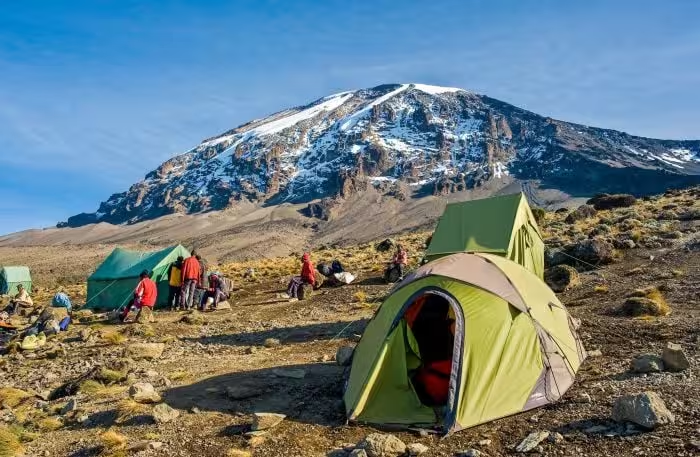
Meal Plan All meals on the mountain
Activity Level Trekking
Destination Highlights

Your Route Through Tanzania

Click any destination to explore it on the map.

The Days

Day-by-Day Detailed Safari Itinerary

Multiple parks, several days -- and no wasted transfers. Every drive doubles as a game drive.

01
Machame Gate: 1,640 m to Machame Camp: 2,835 m03°06′S 37°16′E
Day 1

Machame Gate: 1,640 m to Machame Camp: 2,835 m

Start your climb through Kilimanjaro’s lush rainforest on a steady trail that can be muddy after rain. The air is warm and humid, with chances to spot colobus monkeys and colorful birdlife. Take it slow (pole pole), arrive at Machame Camp in the afternoon, and settle in with a hot meal. Hydrate well and rest your body begins adjusting from the first night.

Drive—
Route—
MealsB/L/D
NightMachame Camp
02
Machame Camp: 2,835 m to Shira Camp: 3,750 m03°01′S 37°14′E
Day 2

Machame Camp: 2,835 m to Shira Camp: 3,750 m

Leave the forest behind and enter heath and moorland, where the landscape opens up and temperatures cool. The trail climbs gradually, revealing bigger views of Kibo when skies are clear. This is where many hikers first “feel” altitude keep a relaxed pace, breathe steadily, and arrive at Shira Camp for sunset mountain views.

Drive—
Route—
MealsB/L/D
NightShira Camp
03
Shira Camp: 3,750 m to Lava Tower: 4,600 m to Barranco Camp: 3,900 m03°06′S 37°20′E
Day 3

Shira Camp: 3,750 m to Lava Tower: 4,600 m to Barranco Camp: 3,900 m

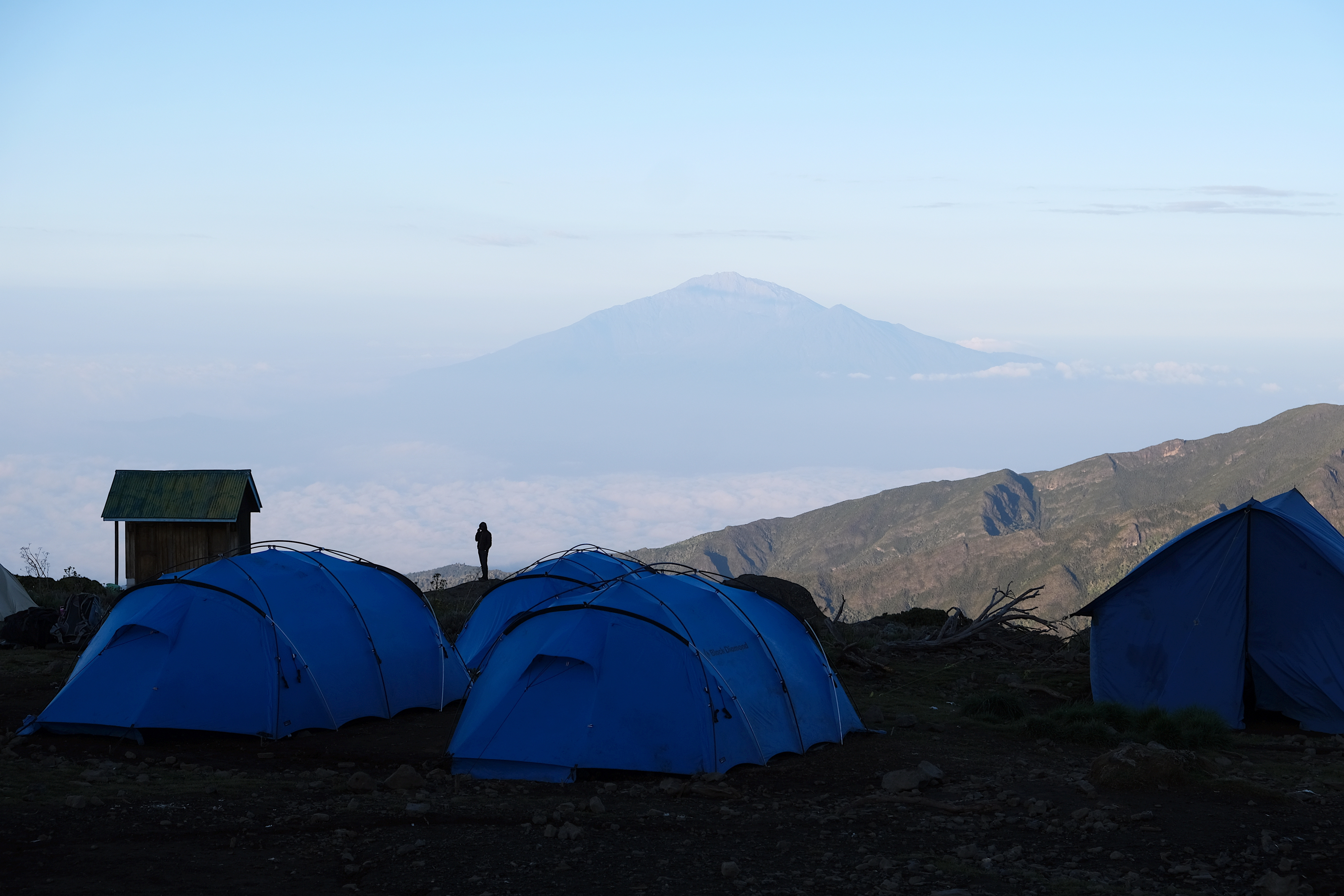
A key acclimatization day climb high to Lava Tower (thin air, slow steps), then descend to Barranco to sleep lower. The terrain becomes more alpine and dramatic, with huge valley scenes and the Barranco Wall visible ahead. This up-and-down pattern improves summit success, so focus on hydration, warm layers, and a calm rhythm all day.

Drive—
Route—
MealsB/L/D
NightBarranco Camp
04
Barranco Camp: 3,900 m to Karanga Camp: 4,035 m03°07′S 37°21′E
Day 4

Barranco Camp: 3,900 m to Karanga Camp: 4,035 m

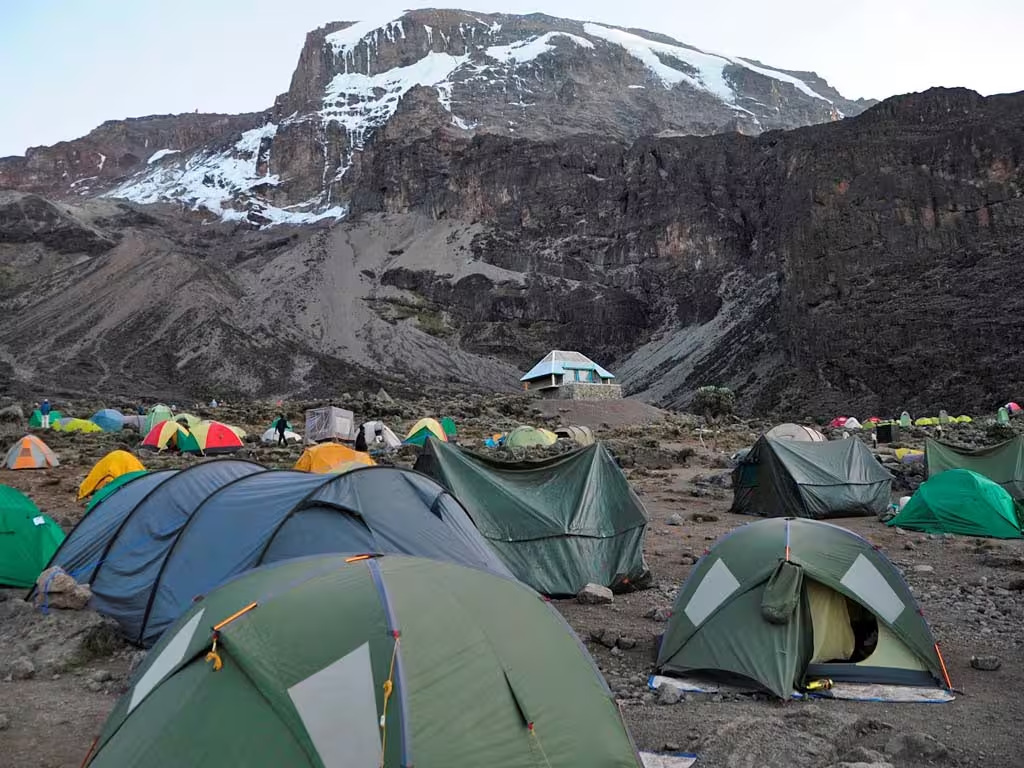
Begin with the famous Barranco Wall hands-on scrambling in places, but non-technical and guided carefully. Above the wall, traverse ridges and valleys with stunning views of glaciers and the southern slopes. The day is shorter, letting you recover while continuing gentle acclimatization. Arrive at Karanga Camp, rest, and prepare for higher camps.

Drive—
Route—
MealsB/L/D
NightKaranga Camp
05
Karanga Camp: 4,035 m to Barafu Camp: 4,640 m03°06′S 37°20′E
Day 5

Karanga Camp: 4,035 m to Barafu Camp: 4,640 m

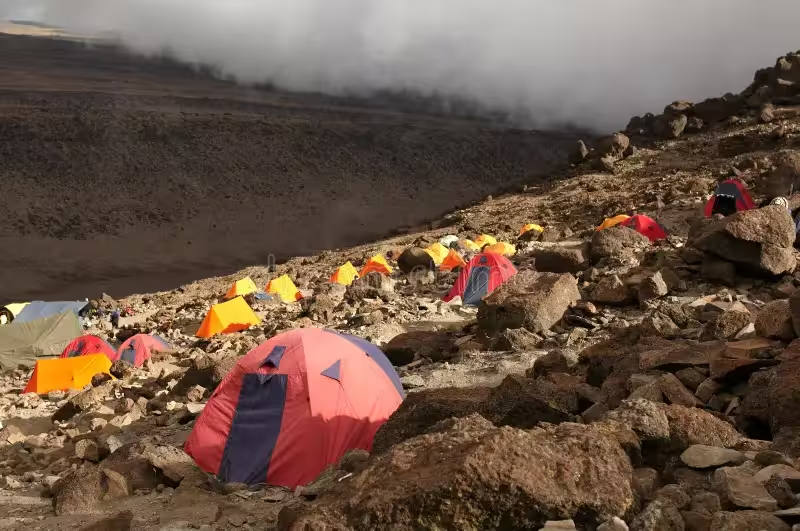
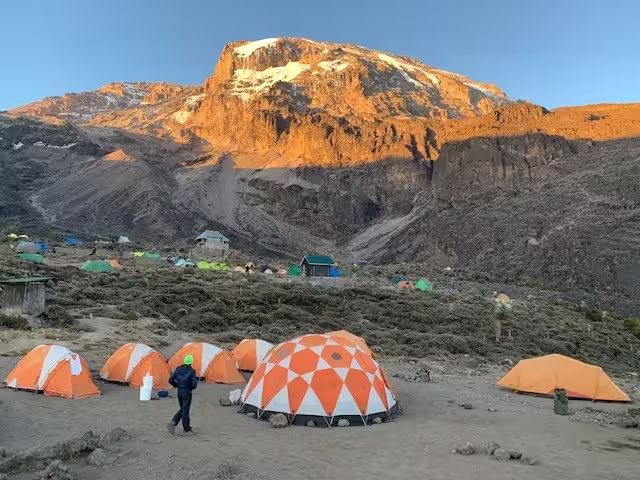
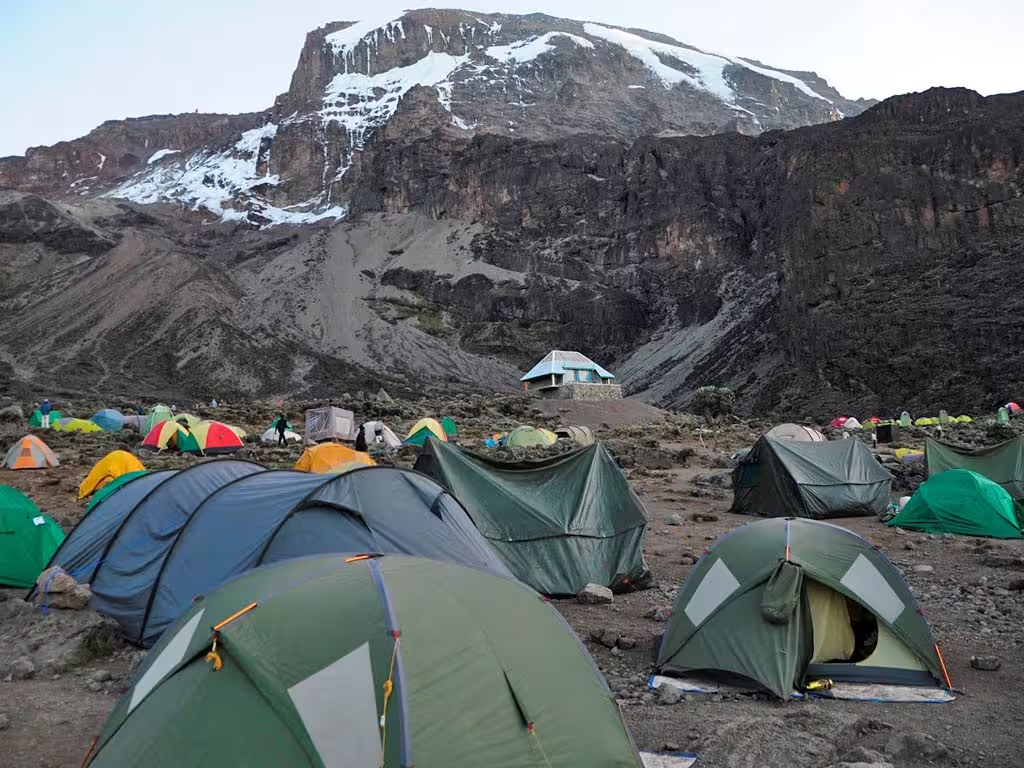
Climb to Barafu, your summit base camp, across a stark alpine desert landscape. You’ll reach camp early to rest, organize your summit gear, and eat a strong dinner. Your guide will brief you for summit night aim to sleep early, keep sipping water, and conserve energy for the midnight start.

Drive—
Route—
MealsB/L/D
NightBarafu Camp
06
Barafu Camp: 4,640 m to Uhuru Peak: 5,895 m to Mweka Camp: 3,100 m03°09′S 37°22′E
Day 6

Barafu Camp: 4,640 m to Uhuru Peak: 5,895 m to Mweka Camp: 3,100 m

Summit day begins around midnight. The trail is steep and slow up to Stella Point, then continues along the crater rim to Uhuru Peak often arriving around sunrise for the most unforgettable views. After photos, you descend carefully back past Barafu and continue down to Mweka Camp. It’s a long, demanding day steady pacing and good layering make a big difference.

Drive—
Route—
MealsB/L/D
NightMweka Camp
07
Mweka Camp: 3,100 m to Mweka Gate: 1,640 m03°13′S 37°20′E
Day 7

Mweka Camp: 3,100 m to Mweka Gate: 1,640 m

Descend through rainforest trails to Mweka Gate for your summit certificates. Expect warmer air again and a feeling of relief as the oxygen increases. From the gate, transfer back to Moshi/Arusha for a shower, celebration meal, and well-earned rest.

Drive—
Route—
MealsB/L
Night—
Camps

Accommodation & Comfort Level

Mid-range Accommodations During Safari

Add-Ons

Optional Safari Add-Ons

Optional extras to add before or after your climb.

Before day 1

A night in Moshi before the climb

Gives us time for the briefing and a proper gear check and lets you rest after your flight before the early drive to Machame Gate.

Days 1–6

Private portable toilet

A private toilet tent carried by the crew, a big comfort at the high camps where the shared toilets are basic.

After day 7 · 2–5 days

Safari after the climb

A few days in Tarangire, Ngorongoro or the Serengeti are an easy way to rest your legs and see the wildlife of northern Tanzania.

After day 7 · 3–5 nights

Zanzibar after the climb

Daily flights from Kilimanjaro take you to the island in under two hours, for a few days on the beach once you are down.

The Ground

Where the Safari Takes You

The climb crosses every zone of Kilimanjaro, from rainforest to the summit crater.

Rainforest zone
01

Rainforest zone

The lower slopes of Kilimanjaro are covered in warm, humid forest where the trail can be muddy after rain. Colobus monkeys and forest birds live here.

Shira Plateau
02

Shira Plateau

Above the forest the land opens into heath and moorland on the broad Shira Plateau. Temperatures drop and the main summit of Kibo comes into view on clear days.

Barranco Valley
03

Barranco Valley

A deep valley below the southern glaciers, reached after the high walk past Lava Tower. Giant groundsels grow here, and the Barranco Wall rises above camp.

Uhuru Peak
04

Uhuru Peak

The highest point of Kilimanjaro and of Africa, on the rim of the Kibo crater. Climbers usually reach it around sunrise after a night ascent via Stella Point.

Rates

Price & Additional Costs

Price on request — contact us for a quote for this trip.

Price Details

What's Included

✓ Included

✓ Kilimanjaro park fees, camping fees, rescue fees (as required)
✓ Professional mountain guide(s), cook, and porter team
✓ All meals on the mountain (breakfast, lunch, dinner)
✓ Drinking water (treated/filtered) throughout the trek
✓ Quality sleeping tents + mess tent (depending on operator)
✓ Sleeping mattress
✓ Emergency oxygen (for safety support)
✓ Basic first-aid kit and daily health checks (pulse/oxygen monitoring)
✓ Gate transfers (to/from the start/finish gates)

✗ Not Included

✗ International flights and visas
✗ Travel insurance (recommended: should cover high-altitude trekking)
✗ Tips for guide/porter team
✗ Personal gear (boots, sleeping bag, clothing, trekking poles, headlamp)
✗ Hotel before/after the climb (unless stated)
✗ Snacks, alcoholic drinks, soft drinks
✗ Personal medication and any medical costs
✗ Portable toilet (optional add-on with some operators)
Interested in This Tour?Request a Free Quote
Best Time to Travel

Best Time to Do This Safari

Best time: late Jun – Oct

This is the longer of Kilimanjaro's two dry seasons and the most popular time to climb. Trails are drier, skies are often clear and summit views are at their best. Nights at the high camps are cold, so warm layers matter more than at any other time. The 7-day Machame is busiest in July and August, so book well ahead for those weeks.

Also good: Dec – mid Mar

The second dry window is a little warmer and usually quieter on the trail. Short showers are possible in December and occasional snow can fall near the summit. Clear mornings are common and the views of the plains below can be very good.

Rainy months: Apr – May and Nov

April and May are the long rains, and November brings shorter rains. The forest trails get muddy, cloud often hides the views and summit night can be wet or icy. Climbs do run in these months, but we would steer you to the dry season if your dates can move.

Flights

Flight Recommendation

Arrival

Kilimanjaro International (JRO)

Fly into Kilimanjaro International (JRO), which is about 45 minutes from Moshi. We strongly recommend arriving at least one day before the climb and spending a night in Moshi, so we can do the briefing and gear check and you start rested. The drive to Machame Gate is then early on day 1.

Departure

Kilimanjaro International (JRO)

Day 7 ends at Mweka Gate around midday or early afternoon, followed by the drive back to Moshi. Most climbers are tired and sore after the descent, so we recommend one more night in Moshi and flying out the next day. If you must fly the same evening, tell us and we will plan the descent and transfer around it. Most passports need a Tanzania visa. Apply online at the official immigration portal well before you travel rather than queueing for one on arrival.

Supplementary Costs

Supplementary (not included) costs

Flights to and from Kilimanjaro International are booked separately.
Most passports need a visa. Apply online through the official immigration portal before you travel.
Choose a policy that clearly covers trekking at high altitude and mountain evacuation.
Tipping the guides, cook and porters is customary and is usually handed over at the end of the climb.
Sleeping bags, poles and warm layers can be hired in Moshi if you do not bring your own.
Nights before and after the climb are normally extra unless they are written into your quote.
Why Us

Why Book With Us

01

Climb high, sleep low

Day 3 takes you up to Lava Tower at 4,600 m and back down to sleep at Barranco at 3,900 m, which helps the body adjust before summit night.

02

The extra night at Karanga

Splitting Barranco to Barafu over two days keeps the climbing shorter after the wall and gives you more time at altitude before the summit.

03

Four zones in one route

Rainforest, moorland, alpine desert and the glaciers near the summit, with the scenery changing every day.

04

Down by Mweka

Descending a different trail from the one you came up keeps the last two days fresh and gets you to lower altitude quickly after the summit.

Good to know

Frequently Asked Questions

What people most often ask about climbing Kilimanjaro on the Machame Route.

The rate for this climb depends on your group size, the season and the level of camping equipment you choose. We do not publish one figure because those three things move it a lot. Send us your dates and group size and we will quote for exactly that.
The extra day adds a night at Karanga between Barranco and Barafu. It gives your body more time to adjust before summit night and makes the days after the Barranco Wall shorter. In general, longer itineraries have better summit rates.
You do not need climbing experience, but you do need to be able to walk for six to eight hours on several days in a row, often uphill. Regular hiking, stairs or hill walking in the months before is the best preparation. Fitness helps, but going slowly and acclimatising well matters more for reaching the summit.
Most climbers feel some effects of altitude, such as headache, poor sleep or loss of appetite, and these are usually mild. Your guides check you every day and the rule is simple: if symptoms become serious, you go down. Walking slowly, drinking plenty of water and telling your guide how you feel are the best things you can do.
Nobody can guarantee the summit, because altitude affects people differently and the weather has its say. In general, longer itineraries with good acclimatisation have higher success rates than short ones. Following your guide's pace, eating and drinking well and resting at camp all help.
It is a steep scramble where you sometimes use your hands, but it is not technical climbing and needs no ropes. Guides help you through the tricky steps and the climb takes about one to two hours. Most people find it one of the most enjoyable parts of the route.
Personal gear is not included: good broken-in hiking boots, a warm sleeping bag for sub-zero nights, layered clothing including a down jacket, waterproofs, gloves, a warm hat, a headlamp and trekking poles. We send a full packing list when you book. Some items can be hired in Moshi if you do not want to buy them.
Tips are not included in the climb price and are an expected part of how the mountain crew is paid. The usual practice is a tipping ceremony on the last morning, with separate amounts for guides, the cook and porters. We will send you a current guideline per crew role before you fly so you can bring the right cash.
Enquire

Shall we begin?

Tell us when you would like to travel and we will send you a tailored quotation.

Loading itinerary…
Saved Trips